
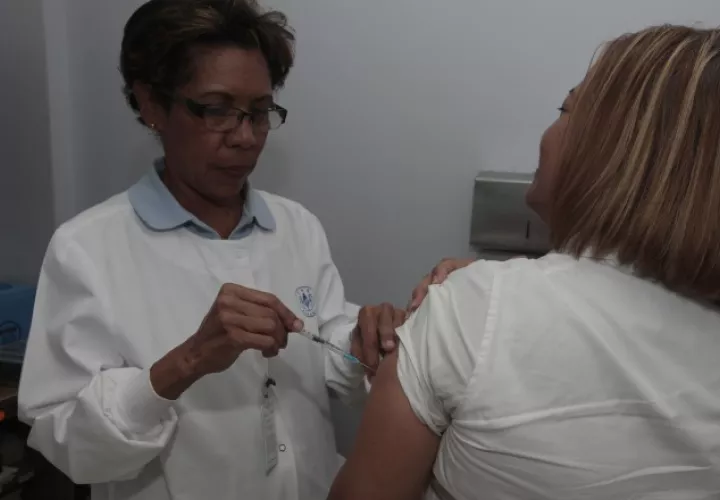
Panama is on the brink of an epidemic of influenza A (H1N1). To date about 310 cases of influenza and about seven deaths have been recorded as confirmed yesterday by some health authorities.
Minister Javier Terrientes confirmed the number of patients hospitalized with influenza in the whole country, who are distributed between public and private hospitals and explained that 35 of them are in intensive care, and also added that if these figures rise, Panama will go way to an epidemic.
"Today we have no epidemic cases, I would say that we have a figure at a level close to reach an epidemic by the number of cases that we currently have… we are only in a state of alert," said the Minister.
Infectious disease specialist doctor Xavier Saez-Llorens ensures that the estimated cases of flu figures still do not exceed values expected according to previous years, therefore, at present, this cannot be considered an epidemic, although this does not mean that in the near future the situation will change.
"As a general rule, every year, flu affects between 5% and 20% of the population, above this percentage it is a likely epidemic," he explained.
In addition, he recalled that flu occurs in people with or without immune deficiencies, and in the latter case, it tends to be more severe, therefore, falling into category of high risk.
Due to the increase in cases of influenza, some health authorities have recommended that the patient who has been diagnosed with influenza should not attend places where there are a lot of people.
Meanwhile, Deputy Minister of Education, Carlos Staff, said that his Administration has begun to take steps so that they are implemented once Q2 classes start next Monday 13 June, when thousands of students will return to the classroom after a week of break.
According to Mr. Staff, they will coordinate the process of vaccination to all teaching staff in schools, focusing on schools where there is higher matriculation.
When asked about whether these vaccines will be applied to students, the Deputy Minister recalled the priority of the vulnerable groups, and also said that, to some extent, the youth population is also covered by the policies of the health centers.
Mr. Staff said they will be flexible with Mensa’s recommendation that if a patient has the flu they should avoid physical contact with the rest of the people.
Faced with this situation, Jorge García Icaza, President of the Chamber of Commerce, urged company members of this Association to seek mechanisms for their collaborators to have access to get the influenza vaccine, as a preventive measure so that the disease does not spread.