


The Panamanian logistics system is facing major challenges both in managing the freight of import and export, so it should improve its processes of delivery of containers into the port terminals, avoid the increase of rates in institutions and create mechanisms that allow competitiveness.
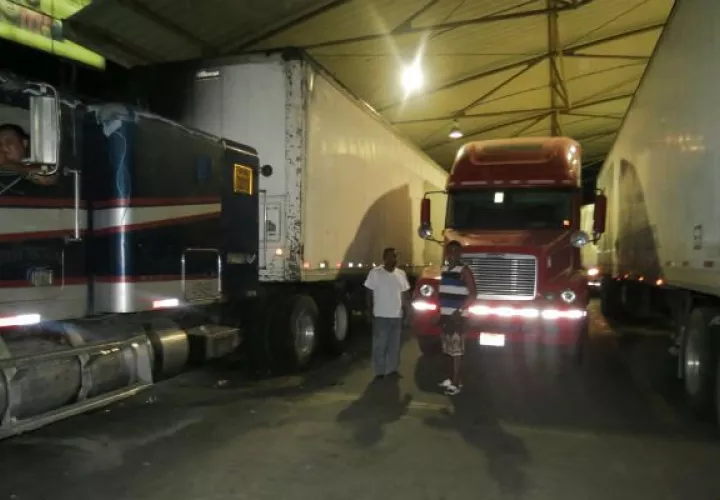
Inland freight transport sector is an important link in the logistics chain, however, it needs a reorganization based on the aspirations of the country to become a multimodal logistics center.
According to the logistics operators, currently anyone could buy a wagon or truck and engage in the freight activity, without complying with too many demands.
Faced with this situation, regulation this activity through a law of freight is sought and in fact is being consulted among both carriers and authorities.
The regulation sets that whoever engaged in this activity must have a locale, where equipment maintenance, paying taxes, and a truck park space for parking the vehicles can be carried out, among others.
These adjustments are made during times in which the country aims to become a multimodal logistics center, where value added to the freight and where the transport sector play an important role.
Faced with this prospect, the President of the Association of Freight Carriers (Acatrapa), Julio Solís, said that to since they are serving larger ships containers both on railway as well as inland could set a busier demand.
He explained that, transportation of goods either port-to-port, port to the airport, or even to certain points in Central America is expected where it would be more feasible to bring freight to Panama and from here to distribute it on inland to Costa Rica or Nicaragua.
Given the conditions aimed at improving inland freight activity, it is necessary to regulate this, in order to provide a better service, however, it is also necessary to regulate or enhance the time-frames of freight delivery to the port terminals.
Inland freight carriers have been facing since several months a difficulty to remove the containers arriving at the port of Balboa, which should be improved in order not to risk the competitiveness of the system, said Solis.
"The port of Balboa has delay problems in the delivery of containers, as well as in its infrastructure," he said.
He noted that a Commission between Acatrapa and the port has been set up, for the pursuit of improvements in the process.
He explained that "a journey that took four hours from the port up to the delivery of the goods, today takes six hours. Unfortunately, you cannot return to collect the second container and you will need to use another vehicle."
He noted that, previously, a movement of containers cost $350 and today it could be costing between $375 and $400, depending on various factors.
"We are being demanded efficiency and lower costs, but the motorways costs are unreasonably high, the time of delivery of the goods has increased and that does not allow us to provide the best freight sought by those large inland carriers ", he said.
He noted that a movement of containers from Colon to Tocumen, for example, could be costing more than $40 roundtrip and, in addition to this, the cost of removing a container from the port must be added, which is between $33 and $43.
Reactions
Aitor Ibarreche, Manager of Panamá Ports Company, which manages the ports of Balboa and Cristobal, said that the delays were due to multiple factors, which, since the beginning of this year have been working in conjunction with the Atrecapa, and "we believe that we are on a good track to give them the best solution among all".
"A process or a service will never be perfect and there will always be areas for improvement, so we are in a very strong dynamics with the Atracapa, reviewing all processes and times to define short, medium and long term actions", he said.
Meanwhile, Rommel Troetsch, former President of the Chamber of Shipping of Panama, said that the way to make a more competitive logistics system is by seeking a joint agreement between port and logistics operators to create the most efficient process for the delivery and receipt of import and export containers.
He noted that the process should be operational for both sectors in order to achieve lower costs of transport to the freight owner.
"An efficient process will prevent high freight costs affecting carriers and will prevent delays and loss of time in the transport chain, especially in the final stretch between port and consignee, “said Troetsch, in view of the posed situation.