


Before the recent signing of the partial trade agreement with Trinidad and Tobago Panama, local exporters say that the country has enough foreign market opportunities, so they are asking the authorities to focus more on improving the productive sectors.
This should be done in order to get the best out of both treaties and existing free trade agreements, especially with those countries of a large volume of inhabitants as the United States and Canada, as well as Central America and the European Union.
In accordance with the Ministry of Commerce and Industry (Mici), the agreement, signed last July 4 between Panama and Trinidad and Tobago, was negotiated at the request of the Panamanian private sector.
The Deputy Minister of International Trade Negotiations, Diana Salazar, highlighted that this is a treaty that was much expected by the Panamanian private sector because, she said, "it had been Panama traders themselves that requested it".
Dairy products such as cheese, also beef, fresh and frozen seafood products, juices of non-tropical fruits, flowers and foliage, vegetables, tropical fruits, flours, fats and oil fish, sausages, cocoa oil, among others are included within this partial agreement.
Experts say that the lack of knowledge about the content of these trade agreements are other aspects remaining that take away opportunities from companies and exporters to open new markets and make foreign investment.
This situation, coupled with the lack of support for the productive sector, has made Panama become the country with the least exports of Central America.
By 2015, its overseas shipments totaled only $536 million, according to figures from the Federation of Chambers and Associations of Exporters of Central America (Fecaexca).
Panama is surpassed by countries of the area such as Nicaragua ($2,419 million), Honduras ($4,485 million), El Salvador ($5,484 million), Costa Rica ($9,661 million) and Guatemala ($10,751 million), which are taking advantage of their agreements, experts say.
For Juan Planells, former President of the Panamanian Association of Exporters (Apex) and the Fecaexca, any new market open to export is of great benefit to the country.
However, he stressed that the issue is that in fact Panama has many trade agreements which offer us sufficient customers in the world, especially with those larger countries.
He added that the problem of the country does not lie in the lack of markets, but in improving the conditions of production in the country to have enough articles on quantity and variety to leverage them.
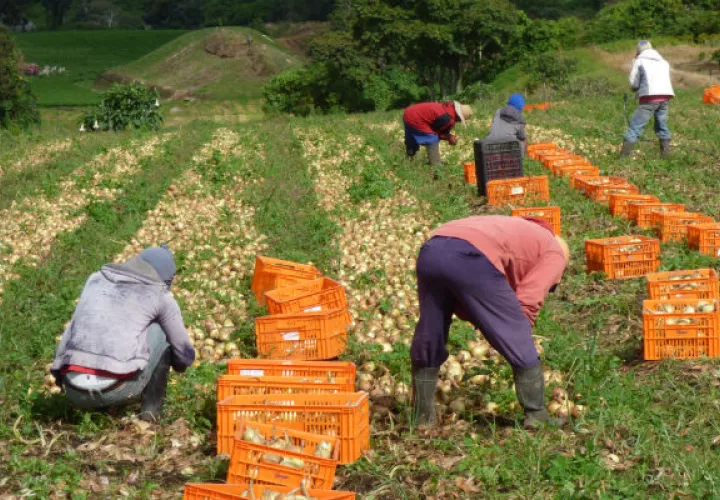
There are, however, unfavorable conditions which have been reflected in the contributions of the different productive sectors of the country which have declined, such is the case of agriculture, livestock and forestry.
In the first quarter of 2014, this activity grew in 0.4%, but then in 2015 it declined in 0.3% and in 2016 the same pattern occurred since the activity fell in 0.3%.
Fishing is another negatively hit sector during the past two years, which is reflected in its official figures, which recorded a growth in 2014 of 27.4%, but which by 2015 fell 0.3% and this year presents a more critical situation with a decrease of 11.2%
Similarly to what happens with the manufacturing industry which in the first three months of 2014 grew 0.9%, then fell 1.4% in 2015 and 1.9% in 2016.
Mr. Planells stressed that to take more advantage of treaties and trade agreements the labor issue in the country should be improved, as well as the conditions of the customs, certifying the production plants and reducing the large amount of paperwork that needs to be done to be able to export their products.
On his part, Julio Ramírez, former President of the National Association of Cattle Breeders (Anagan), said that Panama has not been taking all the advantages that all these treaties offer.
He added that there are few things producers and traders must do to organize and have greater benefits from these treaties.
He added that Trinidad and Tobago, despite being a relatively small market, is interesting, especially for exporters of meat and milk to expand their businesses.
Meanwhile, Ricardo Sotelo, President of the Union of Industrialists of Panama (SIP), noted that more than new treaties what is needed is to raise the country's competitiveness.
The businessman added that this would be achieved through a policy focused on highlighting the Panamanian exports.