


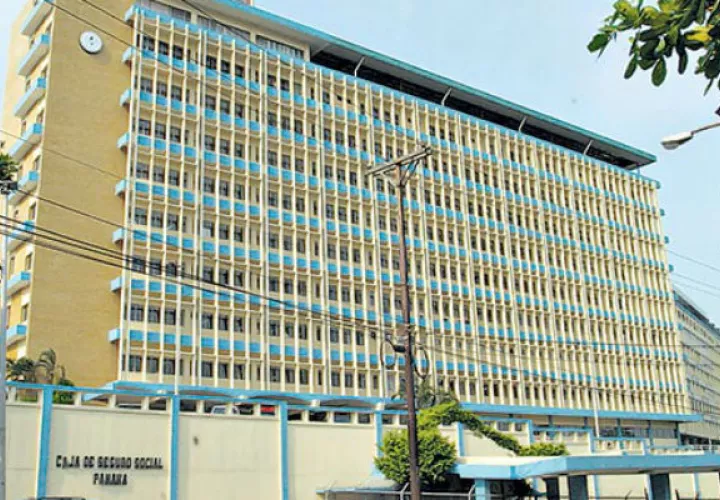
Lowering the levels of informality in the country and making all those people dedicated to it contribute with the Fund of Social Security (CSS) is a proposal made by the Panamanian business sector.
This proposal would be aimed to mitigate the actuarial deficit that this institution has in the program of disability, old age and death (IVM), which amounted to some $420 million by 2015, and a shortage of $550 million which will begin to add up per year as of 2016, according to experts.
For the President of the Union of Industrialists of Panama (SIP), Ricardo Sotelo, "there are many foreigners working in the country, mostly on an informal basis, who should be made to contribute to the CSS since they also benefit from the health service".
Sotelo said that authorities should seek flexible mechanisms so that people can come closer to quote to the CSS.
According to 2015 figures of the Comptroller General Office, the informal activity rate was 39%, which according to expert opinions is relatively high for a country holding the most stable economic growth in the region.
According to the Panamanian Association of Business Executives (Apede), about 650 thousand people are informal in the country since they have no facilities or adequate preparation to opt for a job at a particular company.
If you multiply this figure by the Apede (650 thousand) by the minimum fee that a person normally brings to the CSS with a salary of $600 ($58.50 per month), we would be talking about a contribution of more than $3 million, i.e. more than $38 million a year going straight to the Caja de Seguro Social.
For economist and former Director of the CSS Juan Jované, the proposal of working on the informality problem that exists in the country is a good one since it would help in part to tackle the current deficit that exists in the IVM program.
He noted that during the year 2015, in Panama there were some 109 thousand informal workers who worked in formal firms, something that it is contradictory and has to do with the fact that businesspeople are not getting them registered in the CSS to avoid paying.
Mr. Jované stressed that the private sector could do a good job creating awareness among their own members for not continuing to engage in this negative practice.
He also stressed that there are also the so-called "informal own-accounts", who have it even more difficult to get registered to the CSS because they would have to pay both the worker fee and employer fee themselves, which would be too expensive.
The former Director of the CSS added that a good choice would be for the State to cover the employer share of informal workers because the State is accountable for providing health to the population and to them (the informal workers), so that those workers can get registered more easily.
Meanwhile, Olmedo Estrada, President of the Association of Economists of Panama, said that the vast majority of income generated through the informal economy in the country is not enough so as to be able to pay a fee to the CSS.
Mr. Estrada does not share the proposal submitted by employers because a low-income person with a small business can just cover their basic expenses and perhaps they could pay only the first and second moths of fee, but then we would be adding one further problem to the CSS.
He stressed that the problem of informality is latent and that the authorities should seek a quick way to try to eradicate it or somehow lower these levels.
He added that the Government must find the way to make informal businesses become formal ones in the not-too-distant future.