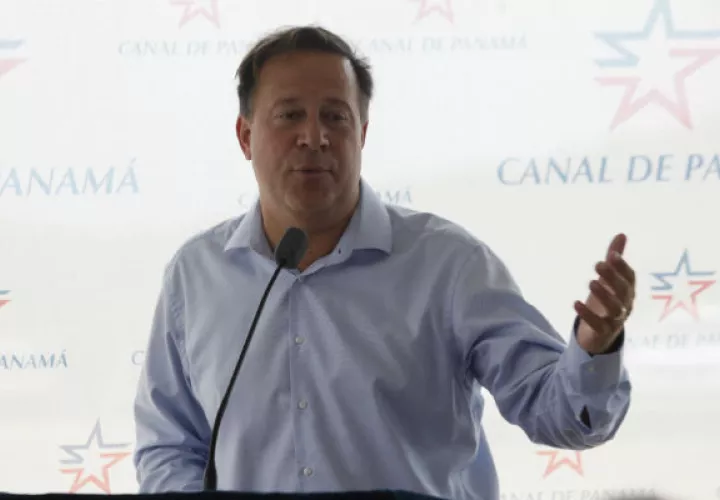
President Juan Carlos Varela has vetoed law 18, which had been succesfully discussed in the National Assembly. The law’s purpose was to provide “decent housing” for teachers working in some of the country’s hard-to-access rural areas. Such was the uncotrovertial nature of the law, that it had been unanimously approved in the National Assembly, in a rare example of bipartisanship.
The unexpected presidential snub has, unsurprisingly, been met with indigation and criticism from all corners. Diogenes Sanchez, a representative for the Panamanian Association of Teachers (Asoprof), was amongst those that voiced their “surprise at the lightening speed with which this bill was vetoed from one day to the other”. Mr. Sanchez went on to criticize “President Varela’s lack of compassion”, highlighting the daily struggles that teachers in remote areas have to face. “Many teachers have even died because of the extreme and dangerous conditions they face”, he admonished, adding that “we simply cannot comprehend how the President could choose to veto a project like this, whose only aim was to provide teachers with decent and safe housing close enough to their schools”. “This was not about giving teachers luxury homes”, he protested.
A unilateral decision
Mr Sanchez confirmed that the very Education Minister, Marcela Paredes de Vasquez, had been surprised by the presidential veto. Adding that he could not understand how “the President can choose to veto a bill without as much as consulting with the relevant minister”, Mr Sanchez concluded that “he must be very badly advised.. well, we know that he chooses his advisors rather poorly”.
For his part, Luis Lopez, representing the National Front of Independent Teachers, explained that the teaching community was “livid with anger” at the veto of law 18. “If anything, this measure was long overdue as a recognition of the sacrifices that some teachers in far-flung, rural areas of the countries have to make. It is just not acceptable that a teacher should leave his or her family behind to attend to their duties and not even have a roof over their head”, he sentenced.
Mr. Lopez went on to explain that the Education Ministry currently makes no allowances for the provision of decent housing to those affected: “teachers have to deduct as much as $80 to $100 a month from their misery wages for a single room, and the government does nothing about it”, he thundered.
Shortages
Teacher Gertrudis Villegas works in a remote school in the indigenous region of the Ngäbe-Buglé tribes. She is one of the many education workers to have experienced on their own skin the risks faced by teachers living in improvisided housing. Having reached her workplace after an extenuating wander in the wilderness, she was finally about to get some rest when she discovered a lethan coral snake by her bed. Her screaming alerted her co-workers, and one of them was able to kill the animal, arguably saving her life. Teacher Keisla Garcia also related to Panama America the frightening experience of having to sleep in scorpion-infested wooden shacks. “I was so terrified of the scorpions that I would cover myself in powerful insect repellant, hoping that would help”, she confessed.
And yet local pests are only one of the many risks faced by such teachers. Many have been robbed, even abused, in their unsafe, makeshift accommodation.
Unsafe
Law 18 stipulated that such dwellings did not comply with the mínimum standards of safetly and hygene, highlighting that “education workers serving these far-flung, rural communities face multiple risks to their health, ranging from venomous animal bites to water-borne illnesses” to execute their duties.
According to Abel Batista Núñez, spokesperson for the Association of Educators of Veraguas (Aeve), in the mountainous areas of the central region, the lucky ones rely on the help of students’ parents, some of whom help build a place where to sleep.