


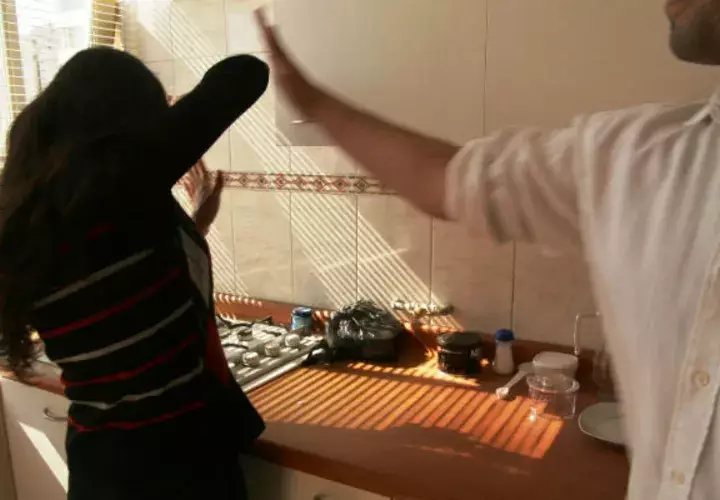
An increase in cases of domestic violence has been recorded in spite of new laws making punishment for such crimes more severe.
According to statistics from the first and sixth prosecutor's office, as of May 2016 13 cases had been recorded, seven of which were femicides, three attempted femicides and three homicides. Data show that the age of victims ranges between 25 and 29, and 35 and 39 years.
Provinces were femicides were reported were: Panama, West Panama, Colon and Chiriqui. In 2014, the number of femicides rose to 39, dropping to 29 in 2015.
According to Markelda Montenegro de Herrera, former director of the National Institute for Women (Inamu), domestic violence is a clear example of human rights violations, since it not only affects the woman in question, but whole families.
Ms. Montenegro de Herrera went on to explain that 'this represents a serious public health problem: it is difficult to estimate the investment required to tackle'. She pointed out how Panama has signed up to a number of international conventions aimed at preventing, punishing and eradicating gender violence. Law 82 of 2013, additionally, reformed the penal code in order to contemplate the crime of femicide.
“Law 82 exemplifies that domestic violence is a social interest problem, which needs to be tackled with a sense of urgency by the state as it touches all sectors of society”, she argued.
In her view, although the law contemplates the creation of courts and prosecutors on the part of the public ministry, more needs to be done. Gender violence has to be repudiated by society at large, because it affects not only woman but the whole structure of the family.
According to Ms. Montenegro de Herrera, “we need to change our attitude and learn to promote family values, respect women and help them raise their self-esteem”.
Both society and state institutions must offer victims the certainty of punishment for perpetrators of this crime: “It is paramount that we learn to control the levels of violence and find help for both men and women who find themselves in violent surrounding: without such help, they are unlikely to be able to break the cycle of violence they are in”, she explained.
For her part, Eyra Harbar, legal counsel for Inamu, confirmed that all reported cases had been seen to, and the people involved had received the necessary assistance in centers spread across the country. “So far we have opened 12 centres (Cinamu) across the provinces of Panama, West Panama, Herrera, Los Santos, Cocle, the Embera-Wounaan indigenous reservation, and Darien; we're due to open three more which will be located in Veraguas, Bocas del Toro and other indigenous reservations”, she detailed.
Ms. Harbar explained that each center counts with a psychologist, a lawyer and a social worker that jointly bring first-level assistance to women affected by gender violence.
Complaints
Domestic violence remains the number one complaint in the capital as well as San Miguelito districts.
For what goes of 2016, in the San Miguelito complaints center some 2,138 cases have been recorded: domestic violence represents the number one cause of complaints.
Eneida Garcia, head of the complaint centre for the office of Atty. general in San Miguelito, confirmed that some 575 cases of domestic violence had been reported, while 585 protection orders were issued in response.
In the capital district, 540 cases of domestic violence had been denounced so far in 2016, with a, peak in June, according to Leandra Martinez, who is responsible for the local complaints centre.
Inamu can rely on two housing structures across the country for the most complex cases of domestic violence.
According to Ms. Harbar, 'the reception centers provide legal and psychological support for women'.
She pointed out how such centers represent a window of opportunity for women. In the first quarter
of 2016, more than 500 cases were seen to across the existing seven national centers.
Regulation
Ms. Harbar explained that a document that has been "elaborated with the support of a programme of the United Nations (PNUD) as well as other institutions specialized in these issues" will be put forward to the government ministry this August. The document contains suggestions on improving law 82 of 2013. Among the measures contemplated by the law, is the creation of courts and prosecutors specialized in gender violence.