
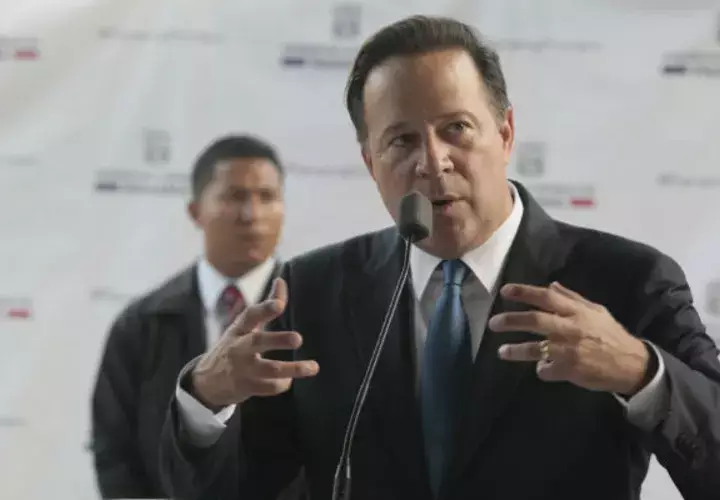
President Juan Carlos Varela’s failure to tackle fundamental problems bedeviling the country’s public administration has become a painful reality for ordinary Panamanians. Two years into his mandate, standards have fallen dramatically in areas such as public health care, education as well as security.
The poor handling of the state administration machine has led to a sharp slowdown in economic growth, something that is being tolerated less and less by an increasingly restless population.
Probably the single most important failure of the government has been on the public security front. The increase in the rate of street murders, robberies, gender crimes and so on, has left in plain sight the ineffectiveness of the government's policies in this crucial area.
In second place, are the problems facing public health care. The quality of patients' care has deteriorated sharply, as surgeries have been canceled across multiple public hospitals, mostly as a result of lack of proper medication and medical supplies.
To make matters worse, the government is facing criminal lawsuits as a result of its arbitrary decisions to halt construction of medical facilities that had been initiated under the previous administration. This not only has affected public health care provision; it has also had a very negative impact on the construction sector, a key contributor to the Panamanian economy as well as a key source of employment.
The icing on the cake has been the breakout of international scandals - such as those relating to disgraced law firm Mossack Fonseca - which have done great harm to the image of the country
abroad.
Time has also shown how one of President Varela's key electoral promises - the introduction of price controls on key food items - was ill advised, as many critics have pointed out two years ago.
According to the Panamanian chamber of commerce, this unfortunate measure has proved a failure: if has created unfair competition amounts producers, and has actually resulted in price increases to the detriment of ordinary Panamanians.




Finally, President Varela's promises on the key education sector have proven hollow. More marginalized communities, such as Panama’s indigenous regions, has seen no tangible improvement in educational standards.
Faced with this litany of problems, President Varela has remained unmovable and has barely taken any remedial action. This is in spite of multiple pleas for a change of course in the government’s direction from all corners of society. Former president Ricardo Martinelli has, for one, incessantly demanded that President Varela “give up all the hatred and persecution that has done untold damage to whatever progress Panama had managed to achieve”.
During the presidency of Juan Carlos Varela, the public ministry has acted in a politically motivated fashion to persecute officials from the previous administration, while sheltering current administration officials, and their associates, involved in corruption scandals.
Contenido patrocinado




Últimas noticias