



On the face of it, the numbers look promising: 2,397 participants, of which 2,044 have completed rehabilitation and 950 have been reintegrated into society.
The national government boasts about a decrease in high profile crimes and murders by 23% and 22%, respectively, as of June 2016. Yet while the administration hails the programme as a success, ordinary citizens are yet to feel the real effects of such flattering statistics.
The reality is that the effectiveness of the government's security policy is being questioned, and that the programme suffers from major weaknesses two years on from its initial launch.
On the one hand, community leaders who handle very closely the issue of neighborhoods violence, and who have participated in a programme first hand, advocate its continuation; on the other, they criticize many structural weaknesses in the “Safe Neighborhoods” programme that impede the achievement of full, intended results.
Such is the opinion of Jose Polo, president of the “Give me an Opportunity” foundation of San Miguelito. According to Mr. Polo, the programme requires various corrective adjustments in order to be effective.
First is the issue of the timeliness and effectiveness of the $50 food payments made to former gang members; secondly, the strengthening of the educational aspect of the programme, such as university grants that can help participants to continue with their studies; and thirdly, a necessary strengthening of the link between private companies and government institutions, aimed at helping the reintegration of participants – who are often stigmatized - into society.
Additionally, Mr. Polo emphasizes the importance that personnel in direct contact with program participants should be psychologically and spiritually qualified to deal with young people who have experienced traumas and widespread rejection throughout their life.
Last January, former security minister Rodolfo Aguilera promised a review of all resources and processes of the program, with the aim of overcoming whatever weaknesses it might have. The former minister then explain that it was important to determine whether program participants were allowed a sufficiently long period of detoxification, and whether the program enjoyed a sufficient number of addiction experts given its number of participants.
The arrival of the new security minister, Alexis Bethancourt, coincided with declarations that the programme would be reinforced, especially as concerned follow-up procedures. Panama America made contact with the press office of the security ministry (Minseg), to learn important facts such as: whether the institution had already identified the key problem areas in the program and formulated those actions needed to overcome them; the number of participants that have dropped out and the reasons why they had; the money set aside for the programme for 2016; as well as other relevant information the public might find of interest. Minseg replied that they would double check the information and get back in touch with the data requested. Regrettably, by the time this article went to press, no such information had been produced.
Frustration
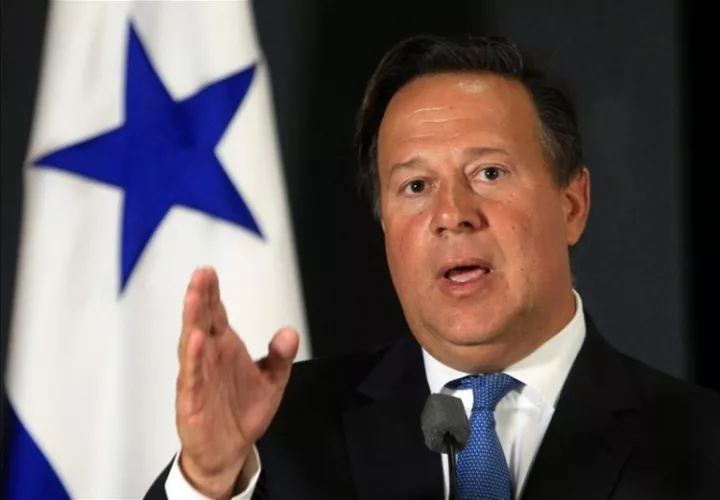
The effectiveness of the “Safe Neighborhoods” program has been questioned so widely that the criticism reached President Juan Carlos Varela himself. In his speech to commemorate the first two
years of his administration, President Varela mentioned that his security program was in fact "transforming the country in ways that many could not comprehend, but which will have significant human impact and whose value is not easily quantified". In his message to the nation, President Varela pointed out that real progress could not be wholly captured by crime statistics.
Questioned on the subject, political analyst Mario Rognoni pointed out that "the government’s effort ought to be applauded", but qualified that by cautioning that results on the ground were not as significant as the president would like to believe.
“I do not feel that gang membership has diminished significantly", Mr. Rognoni explained, adding that the government should quickly address failures in the programme as they become evident.
In spite of its mixed results, the security ministry informed that Uruguay had expressed an interest in signing a cooperation agreement with Panama on the program implementation. The current security minister declared that Panama was happy to share its public safety programme on fighting crime through prevention with its southern American neighbor.



Mr. Rognoni's take on the news was summed up in a single sentence: "In the land of the blind, the one-eyed man is king”, he quipped, adding that “if their security situation is worse than ours, perhaps it makes sense for them to look into our programme".
The "Safe Neighborhoods” programme was launched on July 1, 2014, at the time President Varela took office. According to sources in the security ministry, new program groups should be launched by the end of 2016.

Últimas noticias